Documentary Research & Reviews
By Ainsley Brooks
How did Documentary filmmaking get started? (p120) Early filmmakers did not set out to blaze a trail for a tradition that did not exisit. Their great passion was in exploring the limits of cinema, in discovering new possibilities and untried forms. Some of these efforts would jell into what we call documentary film. Looking backward, though, the existence of a documentary tradition obscures the blurred boundaries between fiction and nonfiction, narrative and rhetoric, poetry and spectacle, documenting reality and formal experimentation that fueled these early efforts. This Tradition of experimentation continues to this day but in relation to new forms and new techniques from animation to reenactments: it is what allows documentary itself to remain a lively, vital genre.
Styles: |
Above: Zelig (1983) is a Mockumentary. | Gunner Palace - Observational |
Documentaries Reviewed
In research to this I also watched some documentaries and made notes on the styles used, the filmmaker's aim and the general outline. These have definitely influenced me and will benefit when it comes to making the documentary next year.
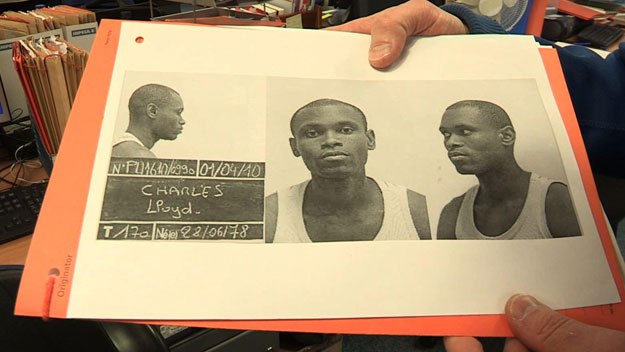 Picture taken from Channel 4 | 1st Documentary: Hunting Britain's most wanted (2011) Summary: Cutting Edge goes behind the scenes at New Scotland Yard's Extradition Unit as they track down murderers, suspected rapists, and armed robbers from abroad Review (attached):
|

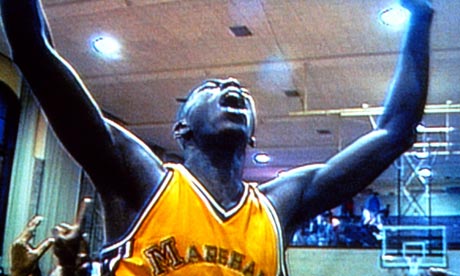 Picture taken from The Guardian | 2nd Documentary: Hoop Dreams (1994)
Review:
|
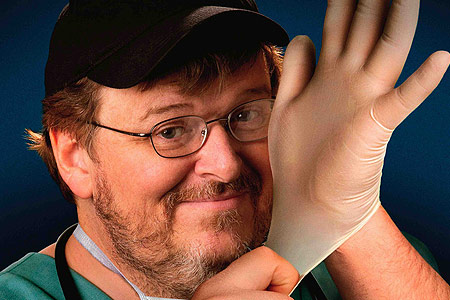 Picture taken from Moviemail-Online | 3rd Documentary: Sicko (2007)
Sicko (2007) directed by Michael Moore, is a documentary comparing the highly profitable American health care industry to other nations, and HMO horror stories. Michael Moore is both on camera a lot of the time investigating this case; there is no ‘voice of god’. The film focuses on interviews and documenting the people this documentary is aimed at. It has an impact on the viewer because it informs the risk of not having good health care. |
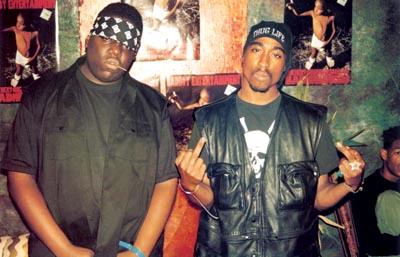 Picture taken from FilmCritic.com | 4th Documentary: Biggie and Tupac (2002) Biggie and Tupac (2002) directed by Nick Broomfield. This is a documentary looking at the deaths of Tupac Shakur and Biggie Small, two well-known singers during the 90s. At the beginning of this Documentary, old footage of them is used to reflect back which helps put it into context for us. Broomfield acts on camera manipulating the primary, he knows exactly how to do this by asking them a “leading question” basically he tells them the answer and asks if they agree to get the response he wants. This shows the participatory mode because Broomfield emphasises and engages with the subject. |
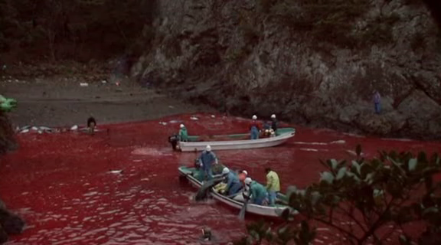 Picture taken from unijadeable.com.com | 5th Documentary: The Cove (2009)
|
Documentary is a form of cinema that speaks to us about actual situations and events. It involves real people (social actors) who present themselves to us in stories that convey a plausible proposal about or perspective on the lives, situations, and eventa portrayed. The distinct point of view of the filmmaker shapes this story into a proposal or perspective on the historical world directly, adhering to known facts, rather than creating a fictional allegory.
How have Documentaries addressed social and political issues?
Documentaries are sometimes made to show the ‘social’ side and things that need improving. For example, Bill Nichols argues that if a film was about housing problems and that the “politics of documentary representation: “But if it is the case that housing problems are unaffected by fifty years of documentary effort” what point is there in continuing to make such documentaries if there is no change. He notes that a failure to achieve social change was not inevitable; it stemmed from the politics of representation put into practice.
"I think every documentary is a product of one’s personality and approach-intuitive, objective or conscious".
– Michael Rubbo (August 1980)
To read some of my Documentary Ideas please click here
Practitioners:
Michael Moore |  Michael Moore above. taken from http://www.hybridcars.com |
A look at Bowling for Columbine, in producing his Oscar-winner, Moore altered history, misled his viewers, and edited the footage and audio in such a way as to reverse the meaning. In one case, he took a speech of a person he desired to target; the problem was that the speech was in fact conciliatory and mild. So he spliced in footage from another speech, cut out paragraphs, and spliced the beginning of one sentence to the ending of another. In another, when he wanted to criticize a political advertisement, but it wasn't as pointed as he wanted, he spliced together two different political ads, and then added titling which was in neither.
Fahrenheit 9/11 is another well known documentary by Moore, the BBC said Disney even refused to release this film, other distributors also seem reluctant and - if Moore is to be believed - the White House wants to stop it being seen.
The reason is if viewers take the film at face value, they will think George Bush is a fraudulent and possibly corrupt president who went to war in Iraq because of a half-baked motivation of grudge, greed and thirst for power.
But this is a Michael Moore film and, while that does not mean he is wrong, it must be watched with a critical eye. Moore wants Bush removed from office. He is determined to have this film released before the US presidential election in November for that very reason.
The film's conclusions are reached through a mixture of firm evidence, interesting information, moving scenes and tenuous theories. Starting with the presidential election in 2000, it firmly plants the idea that Bush's election - thanks to just 537 votes in Florida - was not exactly free and fair.
John Pilger
John Pilger was born in Sydney, Australia October 9, 1939. "The Quiet Mutiny" in 1970 was the first of over 60 documentary films by Pilger. Filmed at Camp Snuffy, the film presented a character study of the common US soldier during the Vietnam War, revealing the shifting morale and open rebellion of Western troops. Pilger described the film as "something of a scoop" - it was the first documentary to show the open rebellion within the drafted ranks of the US military that led to the withdrawal of the land army in 1973.
According to Michael Chanan from “The Politics of Documentary” he argues that practitioners of a direct mode of address which on a frander scale has come to dominate television documentary to the present day, the illustrated discourse delivered by its author – reporter or intellectual expect, John Pilger- in ever changing locations, partly to camera and partly voice-over, manoeuvred by a director whose essential function is the technical one of devising the visual treatment. (p173, The Politics of Documentary)
John Pilger is not only a documentary film-maker but also a journalist, he has said “It is not enough for journalists to see themselves as mere messengers without understanding the hidden agendas of the message and the myths that surround it” and “Official truths are often powerful illusions”.
Other Documentary practitioners:
Nick Broomfield known for
• Aileen Wournos: The selling of a serial killer
• Kurt and Courtney
• Biggie and Tupac (See Documentary Processes page)
Marc Achbar known for
• Manufacturing consent
• The Corporation
