Documentary Research page Modes:
Performative mode: this mode presents ideas as part of a context by recognising the emotional and social impact on the audience, allowing different meanings for different people. A good example of this mode would be Nick Bloomfield’s Kurt and Courtney.
|
Documentaries Reviewed
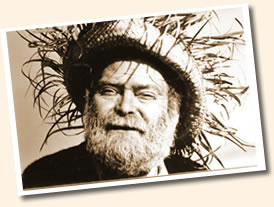 | The Fort Fisher Hermit: The life and death of Robert E. Harrill At the age of 62 Robert E. Harrill decided to give up his life in his home in the mountains and live under the stars and off of the land in Fort Fisher, North Carolina. He spent 17 years outside living off the land. Soon, he became a tourist attraction and everybody wanted to have pictures taken with him and talk to him. “The Hermit” was a friendly native to the land. This documentary appears to be mostly done in the poetic mode as there is an emphasis on the cinematography of the location and the emotional truth behind the situation. The documentary opens using the voice of God. The voice of the narrator is quite significant as the accent is native to the place where the documentary is set. This then allows the audience to feel like they are part of the story rather than the narrator being the superior voice. The use of still images in this documentary helps capture the moment. Since, they are documenting about someone who is no longer alive the still images are used to give historical facts about what he looked like and to show where he came from. Archive footage is also used as this gives the viewers evidence to what is being spoken about rather than just having people say what happened we are being shown it through pictures and archive footage. |
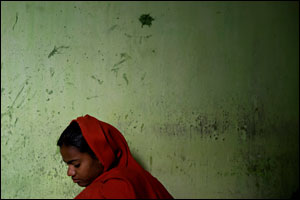
Undesired A short stills film documentary about the social pressure on women in India to bear a child. This film gives us an insightful and horrific view on the violence that haunts women in India solely based on society’s preference to the male gender. Women are considered useless and cause family money as they have to pay a dowry (money to the husband’s family when they marry). This documentary is done using a mixture of stills and film footage of interviews. There is no voice of God but rather the interviews of victims or journalists are heard over the images. Walter Astrada gives a very insightful opinion on how he is shocked by the violence in the country. The images used are quite shocking, in particular the ones in which a dead body of a young women is found and you see how she had been burned alive. This demonstrates the documentary to be very investigative as this is footage that would not be easy to come across and it opens the eyes to people who were unaware of the situation. However, it could be argued that this short film can be seen as a promotional film as it shows negative things that are occurring and states to the viewer that this situation needs to change.
|  |
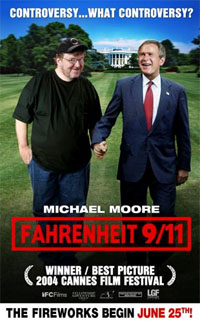 | Fahrenheit 9/11 Being known as the highest grossing documentary of all time, I felt that viewing Fahrenheit 9/11 would be useful for my research. This documentary is politically reflective as most of Micheal Moore’s documentaries are. Fahrenheit 9/11 is Micheal Moore’s views on September 11. It is significant as it investigates the September 11 attacks on America and how the Bush administration used the attacks to move forward it’s agenda to start the wars of Iraq. What I felt was quite unique to this documentary was Micheal Moore’s use of the voice of god; he uses it to manipulate the audience. For example, in part of the film Moore states what President Bush was doing during the 9/11 attacks and states things that may have been going through Bush’s head in a mocking voice. This film demonstrates how documentaries do not just show reality but it interprets it. |
The Cove A documentary that questions and analyses Japan’s dolphin hunting culture. This film could be considered promotional as the film makers aim is to call to action the massive amount of dolphin kills by educating and informing the public of what is happening. This film is done in the politically reflective mode as it addresses an issue and uses propaganda in a positive way to reinforce it. I felt that a lot of footage shown was quite horrific (significantly when a dolphin is shown being stabbed from a distance and you see the water full of blood) which in my opinion was what the film maker aimed to show. As a documentary it is quite investigative as there are parts where the crew hide HD cameras in fake rocks to show viewers what happens in the restricted slaughter areas.
|  |
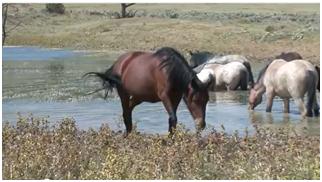 | She had some Horses She had some horses is a poetic documentary about the connection and bond between women and horses. The film follows Lynne Pomeranz, an equine photographer as she leads one of her wild photography workshop. What makes this film poetic is the lyrical style it has. The wide shot of breath taking landscape and the repetition of the soft music creates an emotion that is metaphorical for the relationship between woman and horse. Part of this documentary is also informing “horse lovers” about the decrease in horses in the wild. It addresses some of the issues the horse owners create such as treating the horse as if it’s a “servant” rather than an animal. This documentary depicts the natural beauty found in horses and displays an emotion through the animal that not many people are aware of. This film uses a combination of photographic cinematography and music to capture that emotion. |
Baby Beauty Queens This eye-opening documentary shows how the phenomenon of Child pageant shows in the US has arrived in the UK. This is quite a controversial subject as I personally found it quite disturbing that mothers are dressing their 9 year old daughters in make-up, and heels and telling them act “sexy”. The way in which the film makers in this documentary portray the mother’s and people involved in the beauty pageant is in an honest way and do not misrepresent them. However, as a viewer I felt that the honest representation of the subject was more shocking as it demonstrating the mother’s lack of awareness on how they are exploiting their own children. The style in which this film is done is almost like a reality television show but with more depth. It covers themes such as greed, beauty, materialism, and exploitation. This film follows the story of 3 contestants; 2 of which represent how harmful these pageant are and 1 shows a more redeeming side to the institution of child modelling. This documentary appears to fall under the modes of observational and expository as parts are filmed as a “fly on the wall” where as other parts use a voice of God and interact with the subject. |  |
 |
Marijuana Inc, Inside America’s Pot industry This documentary looks at how the use of pot has become more and more acceptable in America and how is has become a booming cash crop. It is not seen as drug or the street name “dope”. This film looks at cooperate companies that include Marijuana into their products such as pie. CNN goes behind the scenes and investigate Northern California’s Emerald Triangle, which is now considered the Marijuana capital of the U.S. The viewers are shown a warehouse that is designed just for growing medical Marijuana. This is run by a professional business which allows it to not morally be questioned. The use of medical Marijuana is federally illegal but in 2009, Obama said for each state to regulate it, meaning that it is becoming legal in most states in America. This documentary is done in the expository mode because it provides and argument giving logical facts and statistics. Whilst watching this documentary I noticed that it was done in a style that in a sense mimicked a news report. This could be to present the information on a more serious level.
|
