Critical Reading
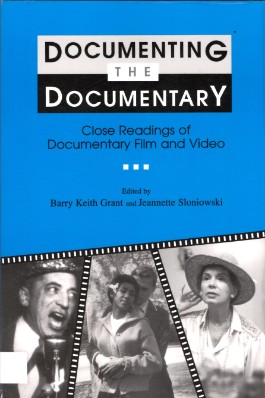
B K Grant and J Sloniowski - Documenting the Documentary: This book is a collection of critical essays which help consolidate documentary as a key area for media scholarship. The writers descend from general theory to engage with the remarkable variety of ways in which specific films produce the ‘shock of the real.’ The book itself included some interesting theories on the history of documentary, including how documentary can be classified correctly in terms of cinema verité and direct cinema. It also went into depth about the many difference modes and genres within documentary, and how they have certain styles to film in, such as the observational mode using the voice of God syndrome. Grant, B. K., Sloniowski, J. (eds) (1998) Documenting the Documentary. Detroit: Wayne State University Press
W Rothmman – Documentary Film Classics:
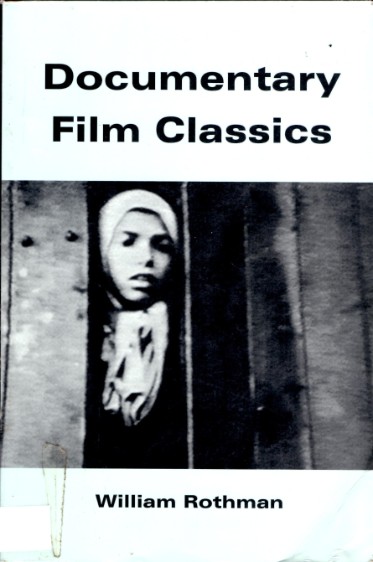
Documentary Film Classics offers close readings of a number of major documentaries, including Nanook of the North, Land with Bread, Night and Fog, Chronicle of a Summer, A Happy Mother’s Day, and Don’t Look Back. Rothman analyses the philosophical and historical issues and themes implicit in these works. Designed to guide film students through the “texts” of films that span the history of the documentary film movement, his readings also focus on the achievements of these works as films per se. This book is both an original contribution to the field of film studies and also suitable for use as a text for college- level courses on documentary film and broader film history courses. This book gives information about the starting documentaries that influenced the documentary film movement and the documentary practitioners that helped this too. It gives a lot of detail to documentaries of the 1930s and 40s, analysing the way they were represented to society and how society reacted to these political and social issues that had been raised. Rothman, W. (1997) Documentary Film Classics. Cambridge: Press Syndicate
Dave Saunders – Direct Cinema: Observational Documentary and the Politics of the Sixties:
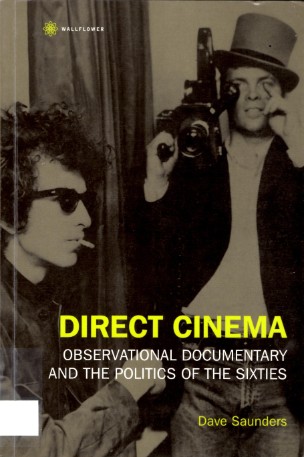
This authoritative book, a worthy entry in Wallflower Press’s indispensible new Nonfiction series, seamlessly combines elegant and insightful close readings of key films of the direct cinema movement of the 1960s with illuminating analyses of their shifting political and cultural contexts… It emerges, in its author’s words, as engaging in “a substantial and compelling dialogue with America, about America, in an epoch beset and defined upheaval. This particular book establishes the history of American documentary and demonstrates the value of cultural content.
Saunders, D. (2007) Direct Cinema: Observational Documentary and the Politics of the Sixties. London: Wallflower Press
Michael Rabiger – Directing the Documentary:
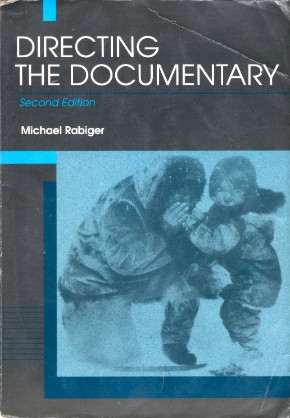
This book provides a practical blueprint for creating a successful documentary film. It also explores the history and development of documentaries and includes converage of film language and ethics.
Rabiger, M. (1992) Directing the Documentary. 2nd edn. Butterworth-Heinemann: Reed Publishing
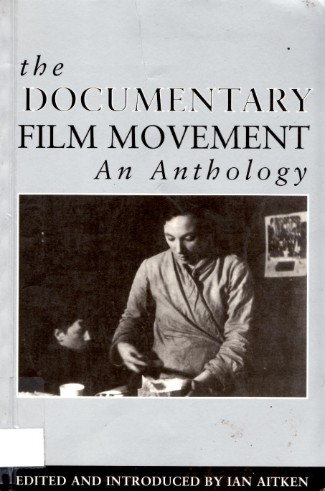
Ian Aitken – The Documentary Film Movement: An Anthology:
The documentary film movement laid the foundations of British national film culture. Few areas of British film history have been as controversial. Although the period of its greatest influence was the 1930s and 1940s, its legacy has continued to make itself felt up to the present day.
Aitken, I. (ed) (1998) The Documentary Film Movement: An Anthology. Edinburgh. Edinburgh Press.
Carly Sandy - Reality Bites: Documentary in the 21st Century (article):
An article first published in Media Magazine in December 2009, it highlights how British documentaries have become dumb- downed, and led by celebrity narrative, as opposed to how documentary from the 1930s and 1940s were more serious and seemed to focus on more severe political and social issues, compared to documentaries that are broadcast on BBC3 that document the lives of footballers’ wives. It seems the lines between reality TV and modern documentaries have become blurred, and documentaries today are produced due to stronger emphasis on voyeurism and sensationalism, without really giving much of a hard hitting story or exposing any meaningful truths on celebrities’ mundane lives.
|      |
Dealing in reality, what defines our everyday world, photographic truth?
This particular article explains the three main photojournalists and the modes they shot in and how their styles differ from one another, but each practitioner still managing to take powerful images. It gives definitions for each mode, such as Henri-Cartier Bresson’s decisive mode, where he aimed to captured life at it’s most natural, including his subjects, where there was no agenda, and no reason behind the particular photograph. He wanted to just click and shoot and see what the results where, to see how life could be stopped for a second and analysed. However, Jeff Wall was the opposite, where he staged his subjects, his set-ups, where he used actors to create a fake event, a counterfeit moment. He had no interest in capturing natural life like Bresson did.
http://learn.winchester.ac.uk/file.php/1179/week_2_09/3_modes_of_photograhy.pdf
Responsibility and Photography
This article aimed to uncover the ethical tension between photography and responsibility despite a lack of awareness for social issues. It stated whether it was right for inhumane photographs to be taken, and how by taking that photograph, you become involved in this new existence, you sympathise, you understand, you’re engaged with the subject. It brings forth the issue of atrocity, and what can be seen before it’s deemed to explicit, or too shocking. The ethical issues involved, the morals that are raised, and whether photojournalism is pushing the boundaries too far.
http://learn.winchester.ac.uk/file.php/1179/week_3_09/Responsibility_and_photography_PDF.pdf
