Critical reading
Defining Documentary:
The oxford dictionaries defines documerntary clearly as ‘a film or television or radio programme that provides a factual report on a particular subject.’However the term documentary was first created by the founder of documentary John Greison. In which the term was first used within the crirtical analsysis of the Robert Flaherty film Moana.‘ Of course,Moana,being a visual account of events in the daily life of a Polynesian youth and his family,has documentary.’He defined documentary as ‘the creative treatment of actuality,(Grierson,1966:13).For my analysis of other Robert Flaherty's documentaries click here.
This simplistic term on documentary now has many sub definitions as according to Bill Nicholls (2001) he divided documentary into six divisions;the observational mode,the poetic mode,the participatory mode,the reflective mode,the performative mode and finally the expository mode.(lio,c) These being;
Observational mode: Usually refered to as the fly on the wall,this mode captures the most dissive moments out of all these modes as the camera only observes an event with little or no interaction with the participant or surroundings.an example of this mode is Pennebakers 'Don't look back' 1967.To see an analysis of Pennebakers film 'Don't look back' click here.
Expository mode:Usually uses the voice of god in which it narrates the hole documentary interacting with the audience and can manipulate them into focusing on particular important aspect of the film or an image.It uses controversial topics or individuals and exploits them into what they are really about.An example of this is the weekly programme of 'inside out' directed by sam smith.
Participatory mode: Unlike the observational mode this mode concentrates mainly on the participation of the documentarian within the culture or subjects activities/surroundings. As they become the primary source in the documentary they usually narrate their journey however still being observant to their surroundings.An example of this is Nick broomfield films in which majority all follow the participatory mode in documentary film making.As he states ""what's important is the interaction between the filmmakers and those being filmed, and that the audience is aware of that interaction so they can make decisions of their own." ( http://www.screenonline.org.uk/people/id/501784/index.html).Please click here for an analysis of a Nick Broomfield film.
Reflexive mode-This mode highlights the artistic approach as it clearly identifies to the audience of the documentary highlihghting the sound edits and camera effects.An example of this is 'man with a moving camera' which is analysed in more detail in photojournalism.
Poetic mode-This mode is the least recognisable mode within documentaries as it usually focuses on the visual concept of the film and the effects it has on the audience.as it manipulates emotions to them via the particaular footage or stills that is chosen.An example of this is john Ivens 'rain' 1928.Please click here for further analysis on this particular film.
Participatory mode-This mode foceses on the subject without hardly any intervention from the film maker.The film maker may also within this mode become a part of the fim being involved in reality.
Styles:
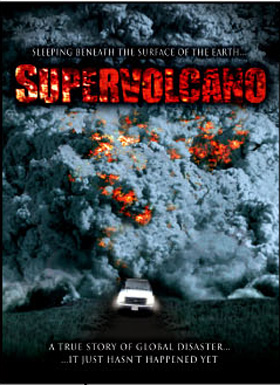
Docufiction: This is simpularly the combination of factual and fictional elements in real time.Many docufiction films uses factual events and either eggasgerate them or twist them to create a sense of fiction. However the docufiction documentaries do state that its based on factual events however not stating just how much is actually factual.An example of this genre of documentary is Supervolcano -Tony Mitchell.
Docudrama: docudrama is a documentary that consist of dramatic reenactments of the actual event.We encounter this every day on programmes such as watch dog.
http://www.bbc.co.uk/watchdog/
Mockumentary/ Pseudo-documentary: This is the use of a documentary format in expressing a fictional story by mocking the outline and using chliche camera techniques to add to the humour of the mockumentary.An exmple of this is seen in alot of micheal moore films.
Mondo film -these documentaries focus on the most cntroversial topics and use the shock factor into appealing to their audience.An example of this mode of documentary is 'Secret Africa'.
Ethno-fiction
This genre of documentary is closely related to docufiction as it uses both elements of factual information intwined with fictional information.However in comparison to docufiction ethno-fiction documentaries focus on the primary that narrates for a social group or ethnicity. An example of ethno-fiction film is Toomelah by Ivan Sen.
Hybrid Documentaries:
The hybrid documentary is clearly the overlapping of various amounts of modes/genres to create a documentary.This is very common today as there are various of ways to produce a documentary which is affordable to a varied amounts of people.These are ;
- live continues links such as i'm a celebrity get me out of here
- online video diries-confeesions
- docusoaps in which they are series that show a biographical observation on individuals lives.
Representing poverty:
As a capitalistic mediatised society it is not unclear that individuals are manipulated by the media via; news reports, documentaries or even newspapers. This report uses this and analysis’s the study of ‘public interest in poverty issue programme’, analysing the influence on the media from a universal, local and communal areas and viewing how or if they manipulate people’s views in a society. In conclusion to the study it was recorded that it is majority the individual’s choice in how they view poverty. As they interpret each singular report on poverty to fit within their personal thoughts. However there are many camera techniques and editing techniques that are put in place to cleverly guide the viewer to rethink their original view point on poverty or even manipulate them into thinking that they are completely wrong. It is clear that there are a varied amount of reports on poverty that all have their own varied approaches in giving knowledge to an audience. Some being a good influence on poverty such as bringing awareness to extreme poverty such as dispatches documentary on 'Saving Africa's Witch Children' in which it follows African children who have been accused of performing witchcraft and highlights their poverty stricken days. This is compared to many dramas now that uses poverty as a way of gaining cheap laughs from the audience these being examples of shameless a channel four drama.
|
Raúl Ruiz: An Annotated Filmography Great events and Ordinary people: In 1978 Rulz Ruiz was commissioned a TV programme which allowed him to capture the French elections from the view point of the Chilean Exile in Paris. This would have been a great documentary if the agenda had been met, however as the right wing party of the election won causing the left wing to lose, opposed to the agenda of the film that was first in place. This is reflected in the ending of the documentary where there is no clear understanding of who won and who didn’t or even why the documentary was made. Causing their to be a sub conscious division in decisions from the audience airing them away from the actual reason of the film. Although this film can be seen to be very modern, as it still today fits into most common debates such as reality/fiction, subjectivity/objectivity and essay film/cinema vitire, it is still a self-reflexive documentary that uses humour to put across the documentary topic. This loses the reality and the focus of the film for the audience, however within this case this is what Ruiz seemed to have intended to do. This is clearly shown within the different clichéd techniques that he used throughout the film, such as, the exaggeration of tv reporting clichés. This adds conventions of a mockumentary for example by shooting shots that he stated have been shot numerous amounts of times. It states that the piece of documentary is 'simulacra' which suggests that it only offers a vague look on reality and overlooks some aspects. This is clearly shown with the statement that suggests 'the only form of reality that is within the film is when nothing is happening'. These harsh words show how much the editing and camera manipulation has decreased a chance of a decisive moment within the footage. Indicating that Ruiz was purposely manipulating this to create other areas for the audience to concentrate on other than the agenda. An example of this is by using sociological clichés in which by using a mother a kids which is cliché TV news reports. |
|
|
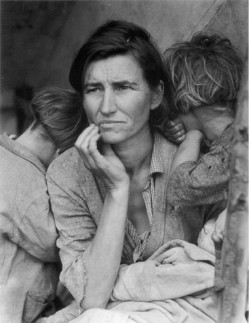 Cinema Vérité vs. Direct Cinema: Although these two varied versions of documentaries follow some of the same views however they also contrast greatly as cinema verite believes that in order to capture reality you have to have a relationship with the subject. However this by some practitioners is negatively percieved as being untruthful and manipulating.As within some cases when Cinema Verite is used some documentarians manipulate questions or stage scenes in order for them to gain the footage that they want. "Cinema Verite is first of all a lie,and secondly a childish assumption about the nature of film." Bruzzi,S (2006). An example of cinema verite is majority of Nick Broomfields' films such as kurt and courtney.Direct cinema on the other hand has much less interaction with the subject as they believe that the subject will act more natural when the camera is invisible to the subject.It could be argued that an example of this would be big brother however some people may say it has aspects of cinema verite as well through the manipulation of big brother tasks.However To be and to have is very much a direct cinema documentary as there seems to be no interaction at all. | Plato: Plato's theory of forms is found within the literacy of 'In Republic' which produced the conclusion that there were two different dimensions of reality; the first being the visual world of sights and objects compared to the second which Plato states is the 'forms' that replace the object while giving a sense of being. Plato within this theory uses the analogy of a cave to represent 'the ignorance of the true nature to the knowledge of ultimate reality.'(Cox,D.Levine,M (2011).Which is in big relation to documentary as Platos theory represents the validity behind a documentary and photos. As both could be staged to manipulate the audience into believing it is reality conveying a certain meaning. An example of this is Dorothea Lange where she staged her images to manipulate the audience.
http://www.youtube.com/watch?feature=player_embedded&v=CHI8lXPRXas http://www.youtube.com/watch?feature=player_embedded&v=MuFD7WEe_yI |
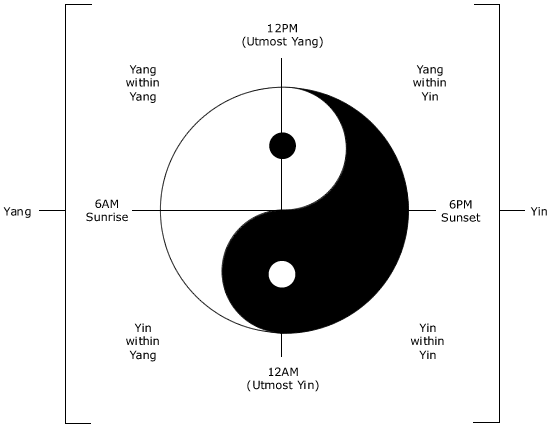 | Yin/yang theory Although this is mainly added to photojournalism it could be argued to be seen in documentary as well,as in many documentaries alike to photos their are elements that manipulate the audience into viewing a certain area that gives out shocking factors or manipulating the audience into feeling a certain emotion.The Yin/Yang theory suggests its the focal points that juxtapose each other to portray the same message. |
Honest Truths Documentary Filmmakers on Ethical Challenges in Their Work
This article represents the arguments and discussions that are attached to the ethics when creating a documentary. It contains all the different obstacles that documentary practioners face and looks at how they over come these. However it also states different situations in which a documentary film maker may feel pressured into ethical responsibility. The article focuses on mainly on how documentary film makers may sometimes not tell the truth with misleading manipulating scenes and their own subjective view.
