Technical Design
Photography is an art form with a lot of technical advances to it from capturing the image to processing it in the editing stages. In the media photographs are used in many ways such as evidence in newspapers, stills in film, communication and advertising. There are different devices used to capture these photographs, webcam, iPhone, digital camera etc. A digital SLR camera is one of the most practical, professional devices used to take photographs today. Its modes/features are so advanced that it can make the subject look surreal. Canon For my photo essay, I used the Canon 550d for the following reasons; two types of lenses to offer; 18 -55mm and the 55 – 200mm, 18 megapixels instead of 12.2, more updated and technically advanced. 550d Advantages
http://www.dpreview.com/reviews/canoneos550d/page21.asp Development of the Canon DSLR filmmaker Philip Bloom has experimented with the Canon 7D. One of his films Dublin's People gets close up and person;a with the community around the town and plays with the depth of field to capture the detail in the colour and shape. The shots are frequently changing to show depth and energy. As it is simple for this camera to shoot intimate footage, I think Bloom takes advantage of this and is able to break the 4th wall which makes the audience become part of Dublin's community. Above: Philip Bloom's Dublin's People Below: RED SCARLET
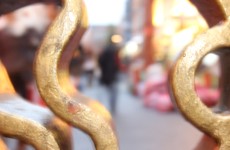
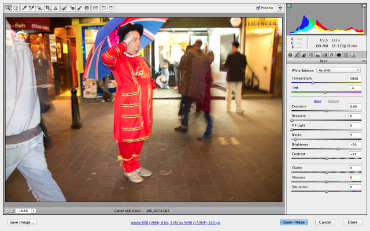
RAW Processing Raw editing allows for photo manipulation to take place. This software is similar to Photoshop however the files are different as JPEG images are smaller in size (KB). CR2 format is the highest quality of image processing. In post production, I selected the images that I thought captured many traits and aspects of Chinatown, London. My images were shot during a clear autumn night, at around 7pm with an ISO of 200. Although, the ISO depends on the However, the reason I chose to shoot my images with a low ISO as there was a great amount of tungsten light that lit up the subjects.
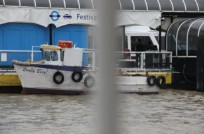
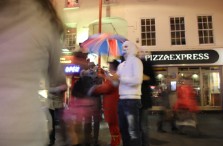
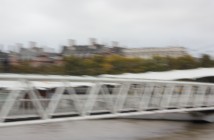
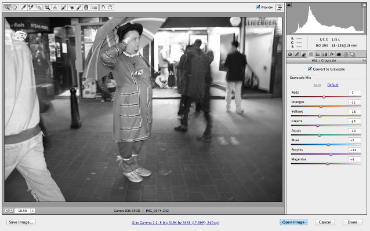
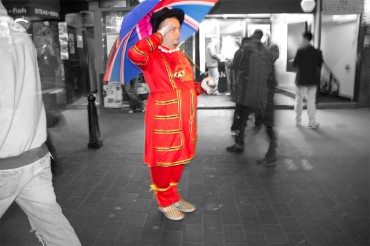
I found that Raw gave the opportunity to expose the image in a different way and being able to enhance certain elements of the images. In the image of the man holding the union jack umbrella, I initially turned it to grey scale but then I found my subject being lost in everything else going on in the photo. So I made the colours pop out more by increasing the red and blue hue levels and then began editing in Photoshop In some of my photos I experimented with the framing; cropping the edges to focus on the main subject. I altered the brightness and contrast levels to make bring out the white and the blacks of the image giving it more depth. | 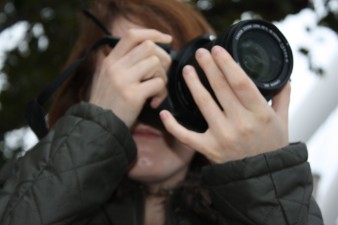 Photo of me shooting with a Canon 550d taken by Charlotte Kerman, Editor of Silver Line Productions ISO - stands for International Organization for Standardisation The ISO is the sensitivity to light that is exposed in the lens. The ISO numbers can range from 100 unto 6400 depending on the model of camera. This setting compliments the aperture - the higher the aperture the higher the ISO. High ISO e.g 200 would be used for a clear bright day as this setting tells the camera that their is enough light coming. Low ISO e.g 3200 would usually be used at night to allow the for the lens to let in more find light and absorb this to prevent gain and making the images pixelated. Depth of field The aperture is the measurement of how long the shutter on the lens is open for. It determines on how much light is exposed to the lens; on a cloudy day the f-stop will be decreased to allow for more light to be absorbed by the lens. The wider the aperture the sharper the focus which will capture the finer detail of the subject. So therefore, The bigger the f stop, narrower the aperture is, so it gives . It is important to know which ‘f’s stop you set the aperture to, in cases where the subject is moving. In image 1. Boat on the Thames the aperture was wider focusing on the background and blurring out the railing in the foreground. Unlike the typical Hollywood f2.3 film, Orson Welles shot his films with an aperture of f16 so that everything close to the camera and from a certain distance would still be in focus. This meant that Welles was able to proceed long takes of the scene without having to cut from one character/object to another. Circle of Confusion This is the sensitive area of the image where the moment when the point of the depth of field becomes visible exposing it as being either sharp and defined or blurred and out of focus. Shutter Speed The amount of light going into the camera when the shutter speed is increased/ decreased - 1/500 sec shutter will be clear and focused whereas a shutter speed of 1/25 will capture the movement – the motion of the object will be blurred. I experimented with the shutter speed to see what the difference was between motion, people moving around and stills - buildings. In image 4. Bridge on the Thames, I panned across whilst taking the photo, focusing and capturing the movement on the bridge. This gave the effect of a soft focus on the buildings in the background.
|