Photojournalism Research
By Ainsley Brooks
Photojournalism is the art or practice of communicating news by photographs, they are used to tell a news story to the world.
History: The beginning (1839-1880) The first known photograph was of a human being, the photo is a blurred figure of a frenchman having his boots polished on a Paris boulevard. Richard Lacayo said photos like these grainy, static, images are the "forerunners of photojournalism and the promise of wonders to come".
Other periods included: • Global News (1880-1920) • Conscience (1880-1920) • Magazine Days (1920-1950) • New Directions (1950-1980) • Resurgence (1980-1995) Photojournalists
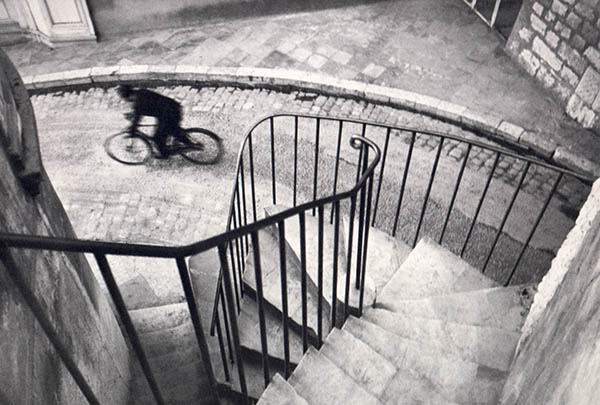
Pre/post- War “The decisive moment” the images are taken without thought of reason for meaning, just a momentary snapshot of reality, taken in an instance with no agenda, reporting on the event “naturally”.
Photojournalism modes: The observational mode - natural (not looking into the camera) This mode emphases the documentary filmmaker's engagement in observing the subject's daily life and circumstances, documenting them with an unobtrusive camera. Example: By maintaining the observational mode, the director allowed the subject to forget the presence of the camera and behave more naturally, thereby letting the audience get a better sense of how she really feels about having such an unusual abundance of facial hair. The reflexical mode - Using everyday situation to construct symbolic social comments, interacting with the subject. This mode demonstrates consciousness of the process of reading documentary, and engages actively with the issues of realism and representation, acknowledging the presence of the viewer and the modality judgements they arrive at. Corresponds to critical theory of the 1980s The poetic mode - The study of people, this 'reassembling fragments of the world', a transformation of historical material into a more abstract, lyrical form, usually associated with 1920s and modernist ideas
|
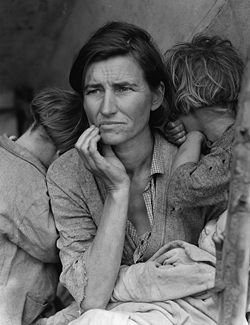
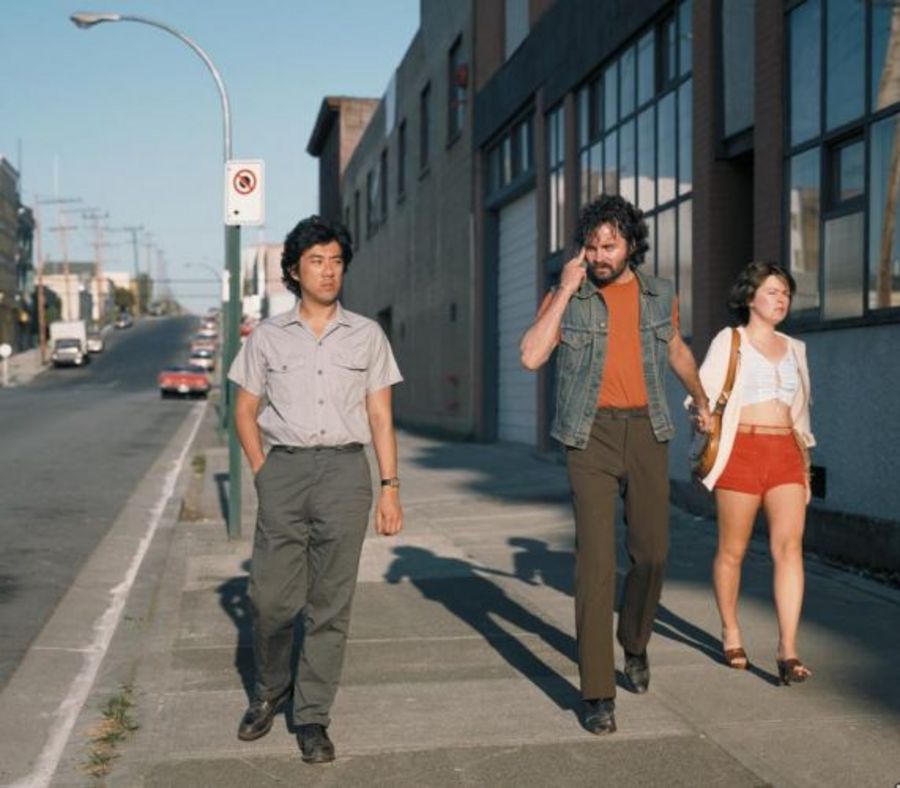
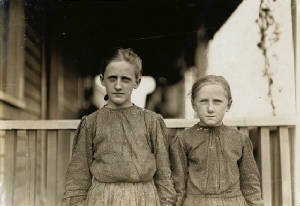
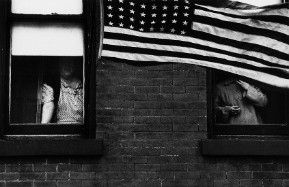
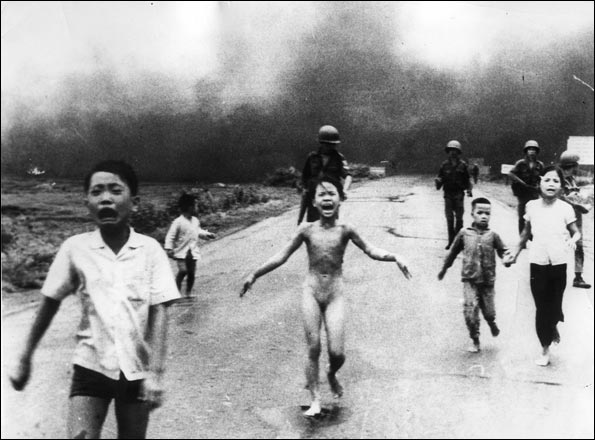
Ron Haviv | 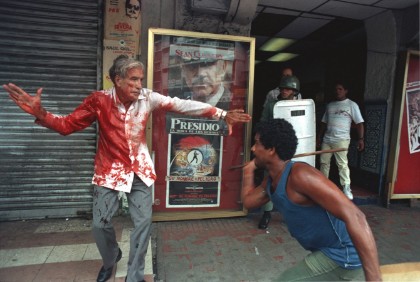 |
Tim A. Hetherington | 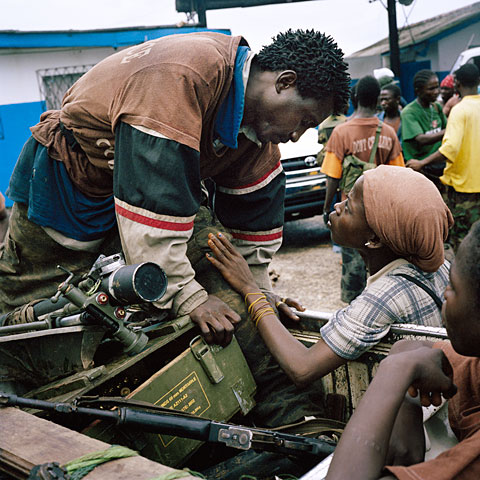 |
Chris Hondros | 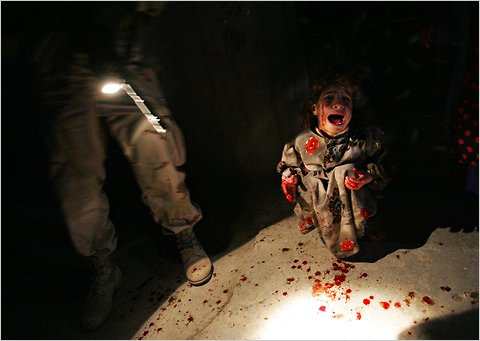 |
Images above taken from "The World's Top Photographers: Photojournalism" book by Andy Steel
Photo Story
"Telling stories with pictures"
For many photojournalists, telling whole stories with pictures is the ultimate professional experience, regardless of whether they run in print, on the internet, or even on television.
Sometimes stories can be built in a matter of minutes; some-times storytelling can take years. Whereas Jim MacMillan of the Philadelphia Daily News photographed his story about a hostage situation in fewer than five minutes (see below), Alan Berner shot his essay about the New West during a six month sabbatical from the seattle time. Brian Plonka, of the spokane Review, spent two years documenting how alcoholism is passed from one generation to another.
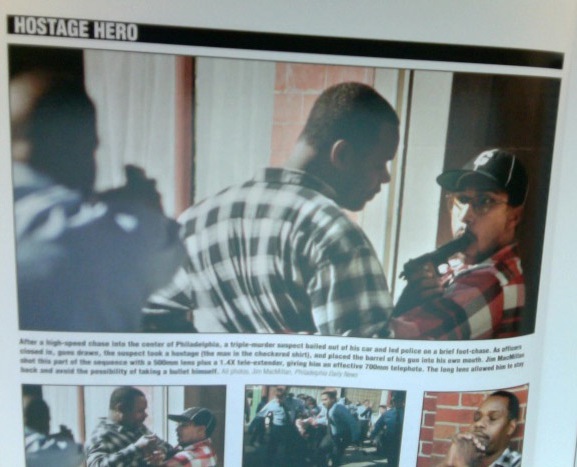 | Jim Macmillan photo essay After a high-speed chase into the centre of Philadephia, a triple-murder bailed out of his car and led police on a brief foot-chase. Jim Macmillan shot this part of the sequence with a 500mm lens plus a 1.4X tele-extender, giving him an effective 700mm telephoto. The long lens allowed him to stay back and avoid the possibility of taking a bullet himself. |
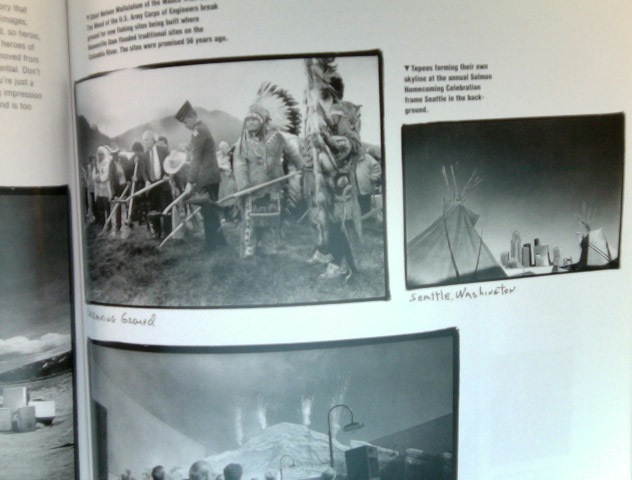 | Alan Berner photo essay
Alan Berner, who works for Seattle Times, received a Nikon/NPPA sabbatical grant to photograph "The West." His goal, he told seattle Times, was to photograph the west in the 1990s as Arthur Rothstein had done in the 1930s. Rothstein had photographed the region for the Farm Security Administration (FSA) during the great Depression. His assignment had been to document disaster. Berner's six-month photographic journey took place during the 1990s, a period of board prosperity. |
Analysing the image
Documentary films are films too. They are among the principal achievements in cinematic history, and involve a complex array of different potential styles and approaches. They do not simply record "the truth" in a purely neutral, objectively disinterested manner; they argue for positions and critique others, often in the interest of providing inspiration for social change. Throughout the recorded history of world cinema, three principal aims drive forward production and reception: 1. entertainment, 2. artistic expression, and 3. social critique as contribution to, or instrument of, social change
1. What is the principal subject of this documentary? What is its principal purpose? Does it argue for a position? Does it critique a position? What kind of impact does it seek to achieve with - and upon - its intended audience?
2. Does this documentary film make use of material? (e.g., live action, scene location, and/or interview) recorded as spontaneously as possible subject only to the effect introduced by the immediacy of observation from the camera operator/director?
3. Does this documentary film make specific choices about what material is to be recorded in relation to the direct observation by the camera operator/director? If so, what kinds of choices, of what should be included and what not, and what kinds of images should be emphasized and what de-emphasized? What, in short, does the documentary film maker look at, and encourage us to look at - and to see - as most important about the principal, subject of his or her film?
4. Does this documentary film combine recorded material with voice-over commentary in which the material directly illustrates what the commentary indicates? If so, how so and to what effect does the film make use of this kind of combination?
More at: http://personal.centenary.edu/~jhendric/film_seminar/analyzing_documentary_films.html
