Critical Reading
By Ainsley Brooks
Photojournalism Representation in film
Hybrid Documentaries Link: http://tobias-lib.uni-tuebingen.de/volltexte/2010/4816/pdf/gedruckte_Dissertation.pdf This looks at how new hybrid television formats combining documentary and entertaining narrative contents and presentation styles have emerged. For example - docu-dramas, docu-soaps, and documentaries with re-enactment scenes.
Link: http://learn.winchester.ac.uk/file.php/1179/week_7_09/Honest_Truths_--_Documentary_Filmmakers_on_Ethical_Challenges_in_Their_Work.pdf There is a lot of discussion regarding ethics within Documentaries. This Study provides the challenges that documentary filmmakers, directors and producers have to identify in the practice of their craft. The article looks at how filmmakers felt pressured and they found themselves in situations where they needed to balance ethical responsibly against practical considerations. The article also focuses on the way they represent themselves and how they don’t always tell the ‘truth’. There has been concerns about documentary ethics, controversies have emerged against several documentaries, such as Fahrenheit 9/11, was it accurate in its factual indictment of the Bush administrations geopolitics? One would argue not… The article mentions that film makers should ‘honor’ the truth to the viewer, so an ethical obligation to deliver accurate and honestly told stories to avoid controversies and negative press.
Documentary in Different Forms: Patrico Guzman: The Battle for chile Link: http://www.nfb.ca/film/capturing_reality_patricio_guzman/ I watched a three minute clip taken from “Capturing Reality: The Art of Documentary”, Patricio Guzman talks about Chris Marker, he mentions that Marker brought his documentary from him to recreate it for a different audience. He talks about how without his help the Documentary wouldn’t have been made; he mentions that Marker was interested in both him and his film and that he wanted to re-edit it for different cultures. From this clip, this shows that documentary filmmakers must sometimes work together in order to make it a worldwide success, which will appeal to all audiences.
Docu definitions trigger modes and terms sheet Link: http://learn.winchester.ac.uk/file.php/1179/2011-12/docu_defintions_trigger_modes_and_terms_sheet_PDF.pdf This looks at the documentary definitions, movement, the modes and types of documentary. The term ‘documentary’, credited to John Grierson, is the man person behind the ‘British Documentary Movement’ The article also looks the early staged events, explaining how ‘real’ events were often re-staged for the cameras in studios, especially if events took place in other countries. Audiences at first were accepting these “re-creations” however filmmakers like Robert Flaherty saw the emergence of much more and made films about contemporary life around the globe. John Grierson was influenced about the thought of the “possibilities” a documentary could capture, he made Documentaries like ‘Industrial Britain (1931) and Housing Problems (1935) which helped him develop filming skills and to experiment with film form, which is still used today. The article mentions the approaches developed by Bill Nichols (1991), who suggested the following ‘modes’ of documentary: The Expository Mode – The voice of god The Observational Mode – eg. Fly on the wall The Interactive Mode – the documentary makers acknowledged. Active audience acknowledged The Reflexive Mode – Awareness of the process Performative Mode – The filmmaker as participant The article also explains about the main points of documentary practice looking at the types of genre terms, for example, instructional which is how something works and how to do something and new forms of documentary arising like ‘video diaries’ and ‘docusoaps’.
Real reality documentary film Link: http://learn.winchester.ac.uk/mod/resource/view.php?id=38269
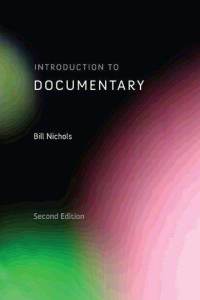
Documentary film, in the words of Bill Nicholas,
is one of the “discourses of sobriety” that claim to tell the ‘truth’, to tell
the truth. But how real is a documentary? And are they sometimes ‘overly’ exploiting the documentary through the use of editing or is the voice of god saying things in a certain way, which may make the viewer side with him? All these are covered in this book, but the end result is to not believe everything you see, but to believe what you believe is the truth.
Canon 450d Visual Guide Link: http://learn.winchester.ac.uk/file.php/1179/2011_-_2012_updates/week_3_camera/450d_visual_guide_PP.pdf This reading was suggested before we took photos for our photo essay, this guide explains how to use a Canon 450D camera, it looks at how the different functions on offer. The guide also tells you how to use the menu on the screen and what each option means and what it is used for. It tells you how to change the white balance, using the the different modes on the top of the camera and so on.
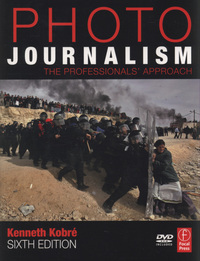
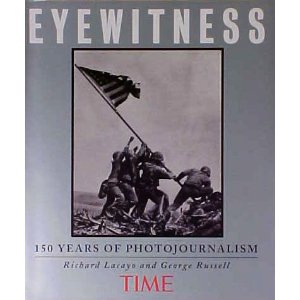
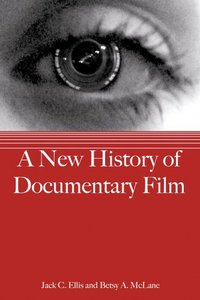
Critical Reading: Books
|
|
|
Reading notes: |
|
|
|
Reading notes: |
|
