PHOTOJOURNALISM
Documentary Modes The Poetic Mode: Associated with 1920’s, 'were a sort of reaction against both the content and the rapidly crystallizing grammar of the early fiction film.' It moved away from 'continuity editing' and instead organised images of the material world by means of associations and patterns, both in terms of time and space.(http://girishshambu.blogspot.com/2006/12/six-types of-documentary.html) Example: Joris Ivens- Regen (1929) Joris Evens is a good example of a documentary film maker who uses this mode. It is described as a, ‘A poetic meditation on the transformation of a city by rain.' A day in the life of a rain-shower. As a city symphony Joris
Ivens films Amsterdam and its changing appearance during a rain-shower. A very
poetic film with changing moods, following the change from sunny Amsterdam
streets to rain drops in the canals and the pouring rain on windows, umbrellas,
trams and streets, until it clears up and the sun breaks through once again. REGEN (1929) http://www.ivens.nl/film29-5.htm The Expository Mode: This is the use of 'Voice of God' narration, where social issues are tackled within an argumentative frame. This is a mode where tough situations are captured and shown to the audience to make them understand things like the scale of poverty or peoples poor living conditions. 'The images of expository documentaries merely illustrate what the narrator is saying and appear to emphasise the 'objectivity' of that commentary; the images seem to show the voice-of-god is speaking the truth'. Bill Nichols (1991) The Human Planet is a great example of the Expository mode: The voice of god invites the audience to interpret behaviour in human terms, which is often used in the wildlife documentaries as well. The Participatory Mode: The encounter between the film-maker and the subject is recorded. The film maker actively engages with the situation they are documenting. i.e. Interview, questions. An Example of these modes: Connie Field's documentary 'Have you heard from Johannesburg' is an example of the use of the Participatory and Expository mode. It is 'seven documentary stories, produced and directed by Connie Field, chronicling the history of the global anti-apartheid movement that took on South Africa’s entrenched apartheid regime and its international supporters who considered South Africa an ally in the Cold War.' http://www.clarityfilms.org/joburg/
Political Reflexivity: Develops the audience’s awareness of the issue.
Example: Michael Moore's Roger and Me (1989) This is a good example of how problems
such as ‘corporate downsizing’ and other issues are shown in a ‘fresh and
distinctive way.’ (Bill Nichols)
The Reflexive Mode: Awareness of the process. Acknowledges the presence of the viewer.The aim of the reflexive mode is not only to represent its subject but to demonstrate itself in the act of representing; in other words, the mode draws attention to its own codes. A documentary about, say, an election campaign, is also a documentary about making a documentary about an election campaign! In a sense this is the direct opposite of the expository and observational modes, both of which attempt to convince us that we are not watching a carefully constructed documentary but rather have access to a 'window on the world'. The reflexive mode problematises what we are seeing by acknowledging the medium. The Man with a Movie Camera is an excellent example of the reflexive mode. Ertov's self-reflexivity (a modernist characteristic) consists of a number of techniques which draw attention to themselves. Vertov is even self-reflexive about the cinema experience: his film opens by showing an audience entering the theatre and watching the film begin. (Documentary- Trigger sheet, Modes or types of documentary truth) The Performative Mode: Acknowledges the emotional and subjective aspects of documentary and presents ideas as part of a context, having different meanings for different people, often in autobiographical in nature. Nichols added this mode in 1994 and it refers to documentaries with on-screen investigators like Michael Moore , Nick Broomfield or Donal Macintyre. This a progression from 'objectivity' to 'subjectivity.' The
Observational Mode: A less intrusive manner of filming. Social actors
are free to act and the documentarists are free to record without interacting
with each other. Example: The boy Mir:Ten years in Afghanistan (2011) This is a great example of a documentary that uses the decisive moment to capture natural footage. For example, there is surprisingly personal footage where Mir’s parents are bickering about money and emotional issues such as Mir’s future and how they are going to cope. He films in an unobtrusive way, by being involved in their lives more like a ‘brother’ than someone filming them. He can speak their language which helps him to bond with the family and take a back seat to just watch their lives with a camera rather than actively ‘filming’ them. This is further evidence of the observational mode. However, there are parts within the documentary where the participatory mode is clear, as there are encounters between the film maker and the subject. For example, when the boy asks questions directly to the camera we become aware of the presence of the film maker. |
"The decisive moment, it is the simultaneous recognition, in a fraction of a second, of the significance of an
event as well as the precise organization
of forms which gives that event
its proper expression."
Henri Cartier-Bresson
PHOTOJOURNALISM PRACTITIONERS
WILLIAM EGGLESTON 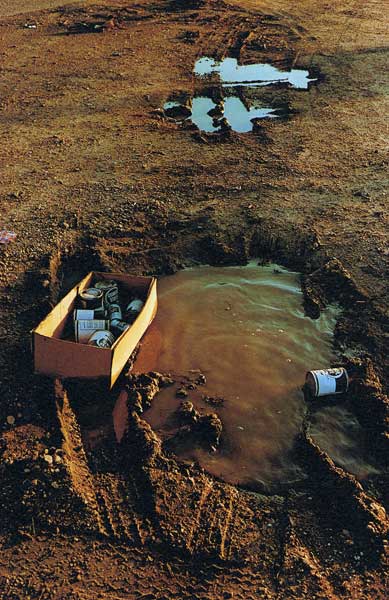
'Eggleston's early photographic efforts
were inspired by the work of Swiss-born photographer Robert Frank, and by
French photographer Henri Cartier-Bresson's book, The Decisive Moment.' http://en.wikipedia.org/wiki/William_Eggleston I like how he represents 'man' in the image, as he uses litter rather than in a literal sense. It is shown through the mess that people have left behind in scenic landscapes. I love his use of colour, as it is quite ironic because usually colour is used to show something in a positive way, whereas a photograph like the above would usually be a bit desaturated to show the negativity of the subject. HENRI-CARTIER BRESSON Behind the Gare St. Lazare, Paris: Image from: http://en.wikipedia.org/wiki/File:Photo_cartierbresson_europe.jpg ‘Henri-Cartier Bresson was a French Photographer considered to be the father of modern photojournalism. He was an early adopter of 35mm format, and the master of candid photography. He helped develop the "street photography" or "real life reportage" style that has influenced generations of photographers who followed.’http://en.wikipedia.org/wiki/Henri_Cartier-Bresson He was one of the founders of ‘The decisive moment’ as he captures life as it is. I particularly like the image above as he has captured the light and dark elements in the moment really well. This photograph is one with many hidden representations, and one that people always recognise. I think that he has purposefully captured elements of it such as the shape of the fence, representing a trapped element, whereas the ladder represents trying to escape. The horseshoe shape on the floor could mean luck as this boy may succeed in trying to escape his current surrounding, or maybe just trying to escape society? | WALKER EVANS 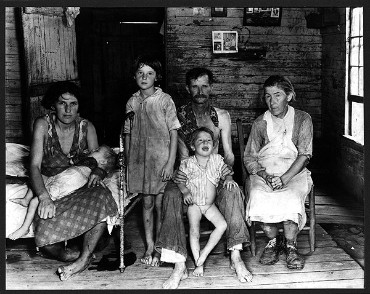 Walker Evans made his first serious photographs in 1928, at the age of twenty four. 'His attempt to become a photographer seems to have been almost a wilful act of protest against a polite society in which young men did what was expected of them.' http://mastersof-photography.com/E/evans/evans_articles3.html Although many of his photographs are of people aware of their photo being taken, I still think that this captures their lives as it is, and shows the harsh reality of a family living in poverty. It is not something that they can hide, even if they were better off. The reflexive mode is clear in this image as they are aware of his presence. 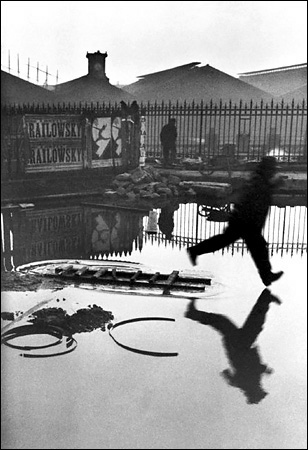 |
The new breed of Documentary Photographers
MIMI MOLLICA
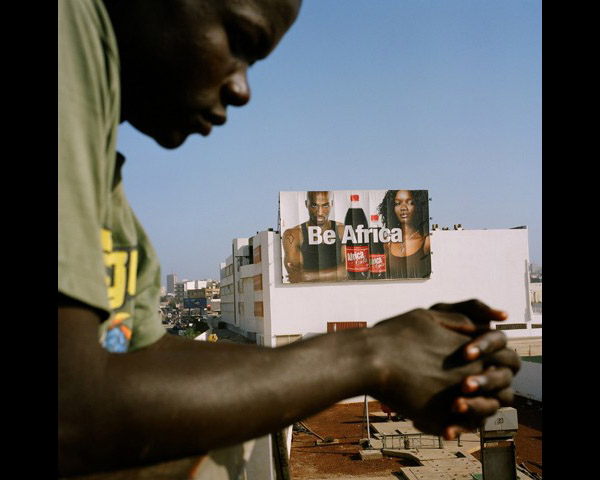
'Mimi Mollica works at length on his personal projects, some of which have been exhibited in numerous collective and single shows. He lives and works in London. The Museum of London recently acquired some of Mollica's work for their collection and he was included in Thames & Hudson's Street Photography Now book.'
Sourced: http://londonstreetphotographyfestival.org/diary/seenunseen-george-georgiou-and-mimi-mollica
“This photograph of Ablay was taken along the 34 km Dakar-Diamniadio road, the internationally funded motorway under construction that links Dakar to the rest of Senegal." (Sourced: http://vervephoto.wordpress.com/)
He has photographed its change, as well as the different people that cross the 'surreal landscape everyday. ...where people struggle on a changing space, on the edge between an enduring past and a doubtful future.' (Sourced: http://vervephoto.wordpress.com/)
He has captured the story of a migrant 'Ablay' through the use of this image. The migrant is struggling to find opporunities in his country and he dreams of reaching Europe eventually. The coke advert in the background represents the goal he is trying to reach through the use of commercialism. The depth of field focuses on this aspect of the photograph with Ablay slightly out of focus with his hands held like a prayer. This is the use of the political mode as this is a current issue as there are many migrants wanting to come to Europe for all their hopes and dreams to come true. This image represents that this future is highly unlikely for Ablay through the way in which it is represented.
CHIEN-CHI CHANG
Burma Land of Shadows from Magnum Foundation on Vimeo.
“The Burmese continue to live a
real-life version of Animal Farm. When I posed as a tourist to make
these pictures, there always seemed to be shadows following me. Big
Brother has many little brothers.” (Chien-Chi chang)
'Chien-Chi Chang has worked for The Seattle Times (1991-1993) and The Baltimore Sun (1994-1995). Chang has documented the life of illegal immigrants in New York’s Chinatown, but he is also known for documenting his homeland of Taiwan. He won the W. Eugene Smith Fund for Humanistic Photography in 1999. He lives in Taipei and in New York City and is a member of Magnum Photos.' Sourced: http://vervephoto.wordpress.com/
The use of sound against these stills and moving images create a harsher reality. 'Burma is rife with paradox' and is an 'intensely buddhist country' where every male enters the monastry at some point in his life.
Chang has shown and developed sound to show that there are 'reminders that behind Burmas cultural façade' of their temples, monastries, beliefs in astrology and other scenic culture, stands the repressive regime which has ultimately held Nobel laureate Aung San Suu Kyi, leader of Burma’s democracy movement, under house arrest for 15 of the past 21 years.' Sourced: http://www.magnumphotos.com/C.aspx?VP=XSpecific_MAG.StoryDetail_VPage&pid=2K1HRGQRLEI
She helped found the National League for Democracy on 27 September 1988. Sourced: http://www.nldburma.org/ This was why she was put under house arrest on 20 July 1989. She was offered freedom if she left the country, but she refused. She was released in 2010.
This Photo Essay captures the democracy that Burma is living in through the use of decisive moment and observational mode.
Now that i have researched into documentary modes and photographers, I feel that I can go out and do my photo essay with inspiration from all of these. I love the use of dark, light and reflection in Bresson's images, and the fact that it has hidden meanings. I love the use of decisive moment in Changs Photo Essay and the political representations used in Mollica's image, which I could develop on our topic of Greyhounds through the use of controversial immages and mixed messages from greyhound racers and facilities.
I also liked the fact that Eggleston photographed a lot of objects as well as people in his images and this is an idea that I would like to experiment with. Evans is a great example of the reflexive/participatory mode which is one that I would also like to experiment with in my own photo essay.
